
Educational testbed & multi-tier architecture
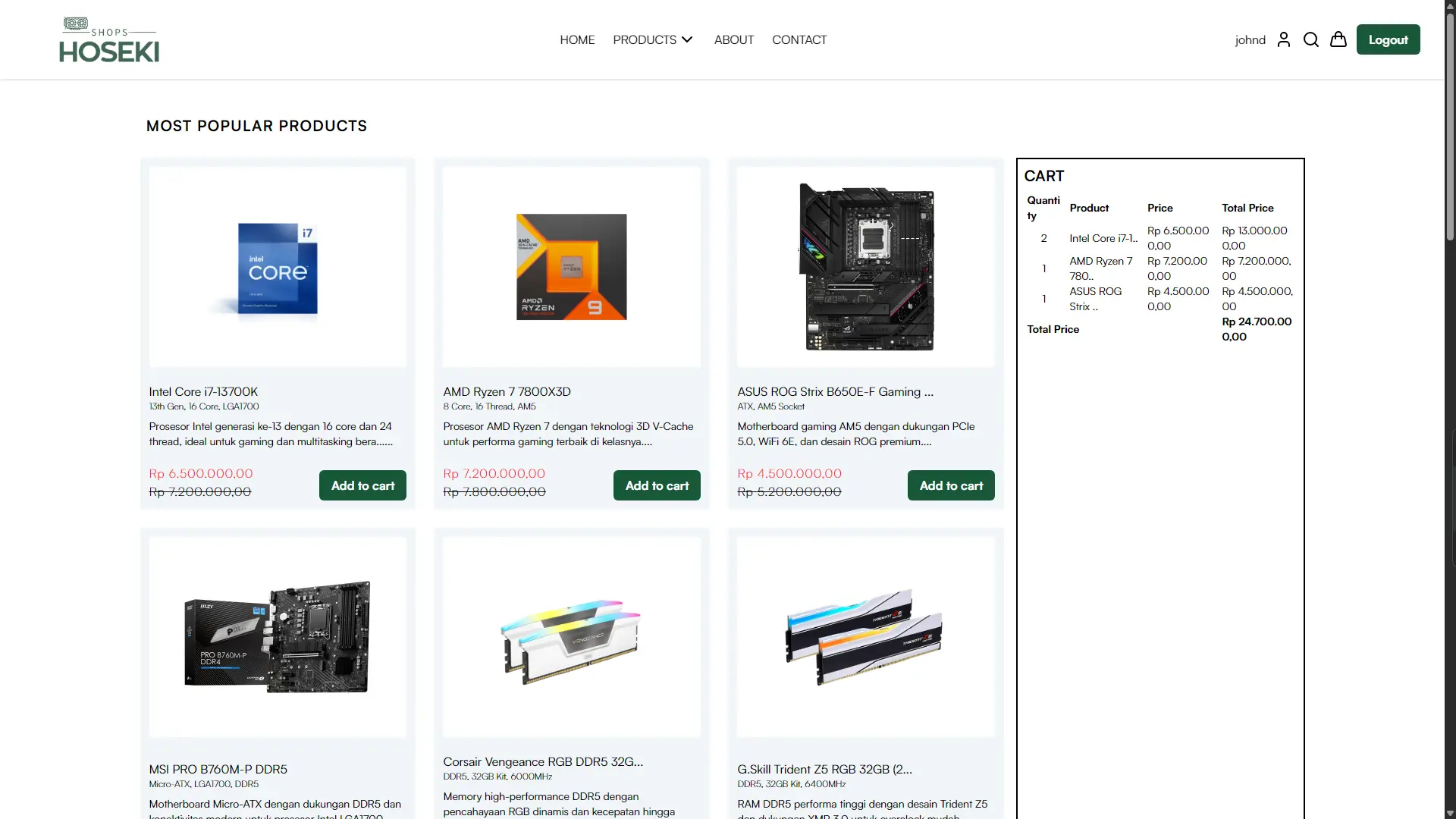
To truly grasp modern cloud-native infrastructure, hands-on complexity is essential beyond trivial scripts. HOSEKI Shops was conceived as a comprehensive fullstack e-commerce testbed built from the ground up to explore real-world operational challenges: container lifecycle management, persistent storage, service discovery, and automated deployment.
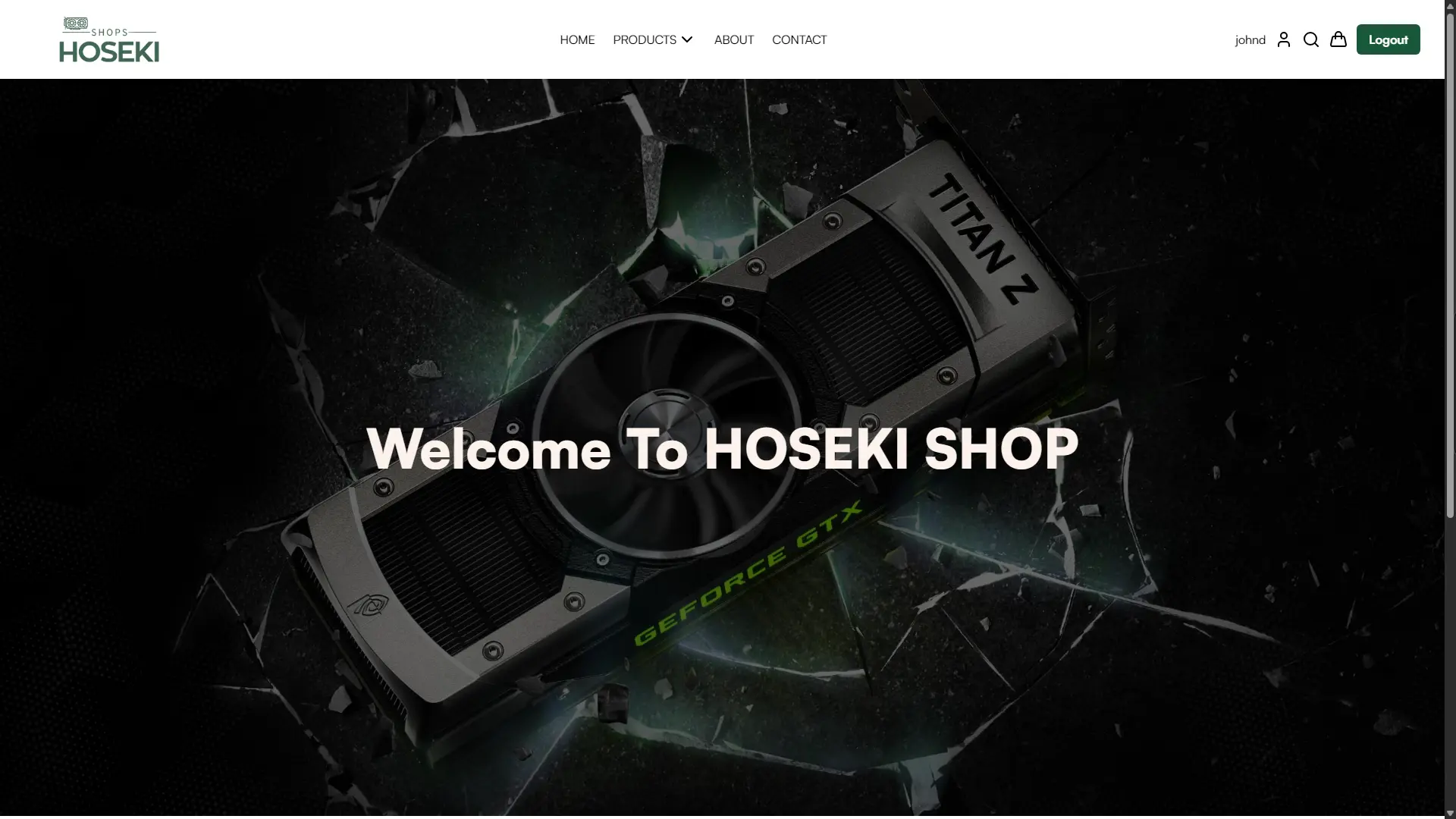
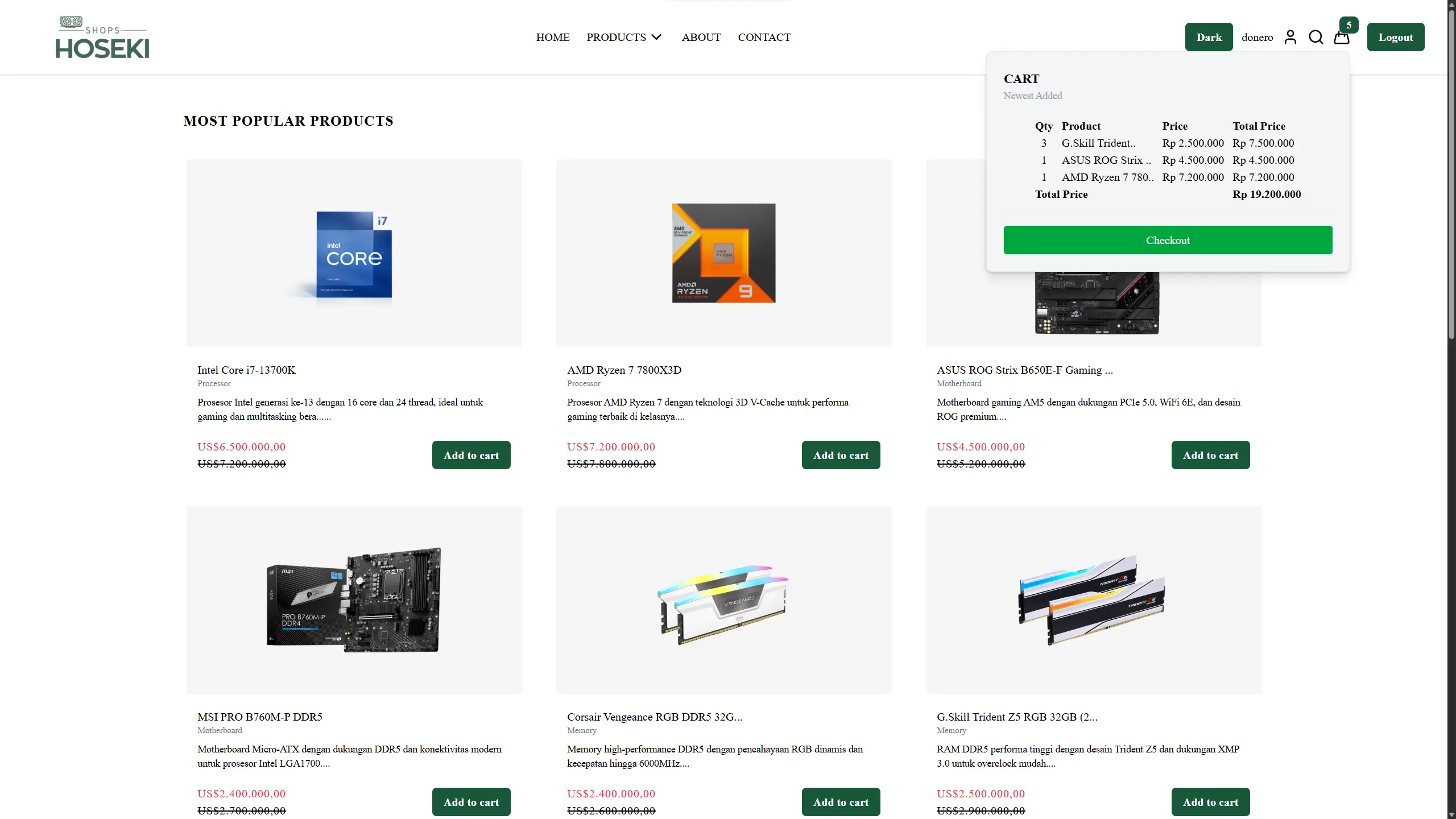
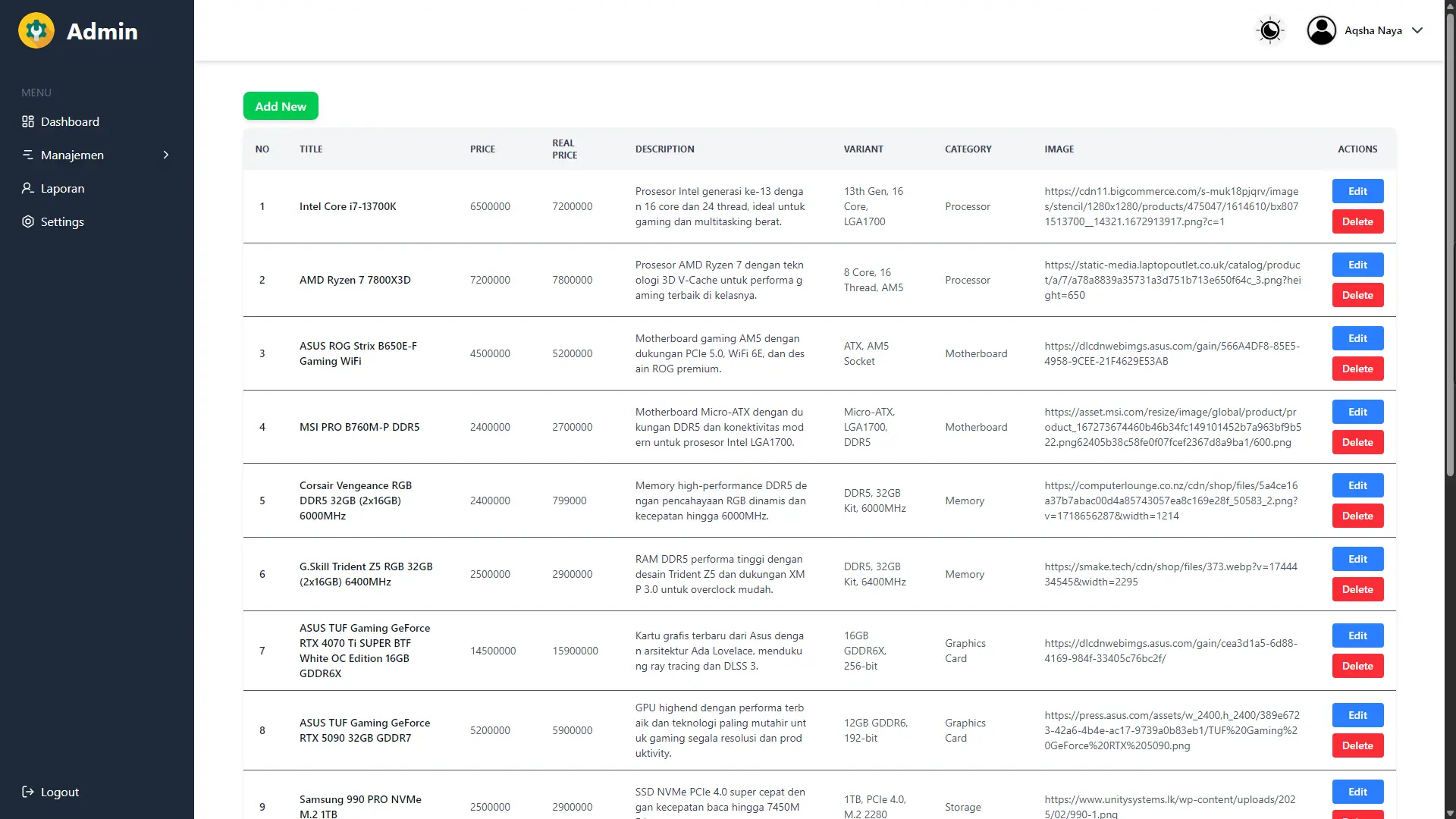
The system is decoupled into four distinct functional tiers: (1) a responsive customer storefront built with React 19, Vite, Tailwind CSS, and Redux Toolkit for real-time cart state; (2) an administrative backoffice dashboard providing full CRUD operations over catalog items and inventory; (3) a high-performance REST API powered by Node.js, Express v5, and Prisma ORM with automated migrations and /health readiness probes; and (4) a stateful MySQL 8.0 relational database requiring persistent volume storage.
Container benchmarks & infrastructure metrics
- 94%
- Image Size Reduction
- 4
- Micro-Containers
- 5
- Max Autoscaling Pods
- 3
- Ingress Endpoints
- 3
- CI/CD Workflows
- 100%
- Storage Persistence
Optimized from ~450MB dev image to ~25MB via multi-stage alpine builds.
Decoupled services: Storefront, Admin Backoffice, Node.js API, and MySQL 8.0.
Dynamic horizontal pod autoscaling (2 to 5 replicas) triggered at >60% CPU utilization.
Single-domain path-based routing for /, /admin, and /api services.
Path-filtered GitHub Actions pipelines eliminating redundant monolithic builds.
Kubernetes PersistentVolume & PVC mounts ensuring zero data loss across pod restarts.
Multi-stage Docker builds & local orchestration
Standard single-stage container builds for Node.js applications frequently produce heavy Docker images bloated with build compilers, linters, and temporary dependencies. To resolve this inefficiency, the storefront and backoffice utilize a two-stage build pipeline: Stage 1 (Builder) leverages node:24-alpine to compile TypeScript and Vite assets into /dist, while Stage 2 (Production Server) copies strictly the static artifacts into a minimal nginx:alpine runtime (~25MB), slashing image sizes by ~94% and eliminating compiler toolchains from production containers.
For local development and integration testing, a declarative docker-compose orchestration coordinates all containers on an isolated bridge network (app-network). It integrates automated MySQL ping probes and environment variable isolation to ensure seamless database bootstrapping before API service initialization.
Kubernetes orchestration, ingress routing & autoscaling
Transitioning from local docker-compose to production-grade cluster orchestration, the entire infrastructure was deployed within an isolated Kubernetes namespace (hosekishops). The setup enforces strict separation of concerns across compute, networking, and persistent storage layers.
Unified Ingress Routing: A single-domain Ingress controller (hosekishops.local) manages external HTTP traffic, routing path-based requests to their respective ClusterIP services: / to the storefront, /admin to the backoffice, and /api to the backend API.
Elastic Horizontal Pod Autoscaling (HPA): Backend deployments define explicit CPU constraints (100m requests, 500m limits). An HPA policy monitors real-time CPU utilization, automatically scaling backend pod replicas from 2 up to 5 instances when load exceeds 60%.
Stateful Data Persistence: Database reliability is guaranteed via PersistentVolume (PV) and PersistentVolumeClaim (PVC) definitions with ReadWriteOnce access mode, ensuring catalog records and user states survive pod restarts, rescheduling, or node failures.
Path-filtered CI/CD & engineering takeaways
To streamline software delivery and optimize build runner minutes, automated Continuous Integration workflows were constructed using GitHub Actions. Instead of executing heavy monolithic rebuilds on every commit, path-filtered triggers (backend-ci-cd.yaml, frontend-store-ci.yaml, frontend-admin-ci.yaml) ensure only modified service directories are compiled, tested, and containerized.
Building both the application layer and the underlying cloud-native infrastructure delivered critical fullstack insights: understanding how application architectural decisions impact container footprint, embracing declarative Infrastructure-as-Code workflows, and building practical confidence with Kubernetes operational primitives.
Keep exploring the work.